Boston, Mass – I have always said that Boston sports fans take the “fanatic” part of their job seriously. And I always encourage guidebook readers to go to a game to experience this energy first-hand. If you can’t make it to a game (or if you can’t get enough), you can still visit the venues where the professional sports teams play. This month I visited the Sports Museum at TD Garden and I took a tour of Fenway Park. Here is my review of both experiences.
Both venues offer one-hour tours for $32, including fees (with slightly cheaper rates for kids). This seems pricey, but it is the going rate for most attractions in Boston. It’s also worth noting that both experiences vary depending on the season and the schedule. Eg, access to the venue might be more limited on game days, etc.
Sports Museum
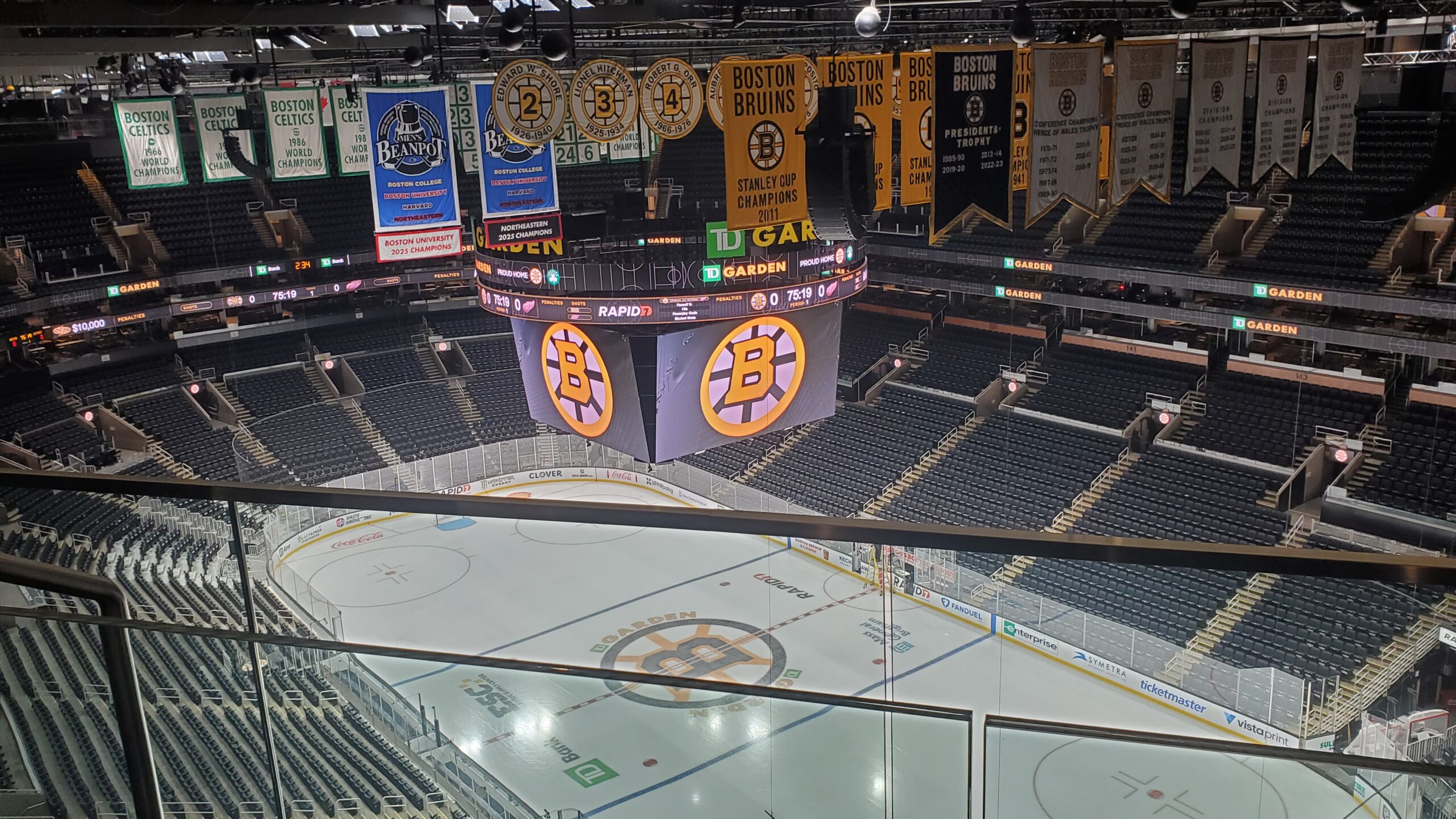
The so-called Sports Museum occupies the upper levels of TD Garden, where the Celtics and the Bruins play. The tour includes a peek into the arena, which is mildly interesting (though it was cool to get an up-close view of the championship banners).
The museum itself was pretty underwhelming. I’m sure it appeals more to real Boston sports fans, but I was not that impressed. The main thing on display is framed photographs of athletes. Some of them are fun, defining moments in Boston sports history, but they don’t make a museum, in my opinion. There were life-size sculptures of a few local favorites, like Larry Bird and Ted Williams, which were kind of creepy.
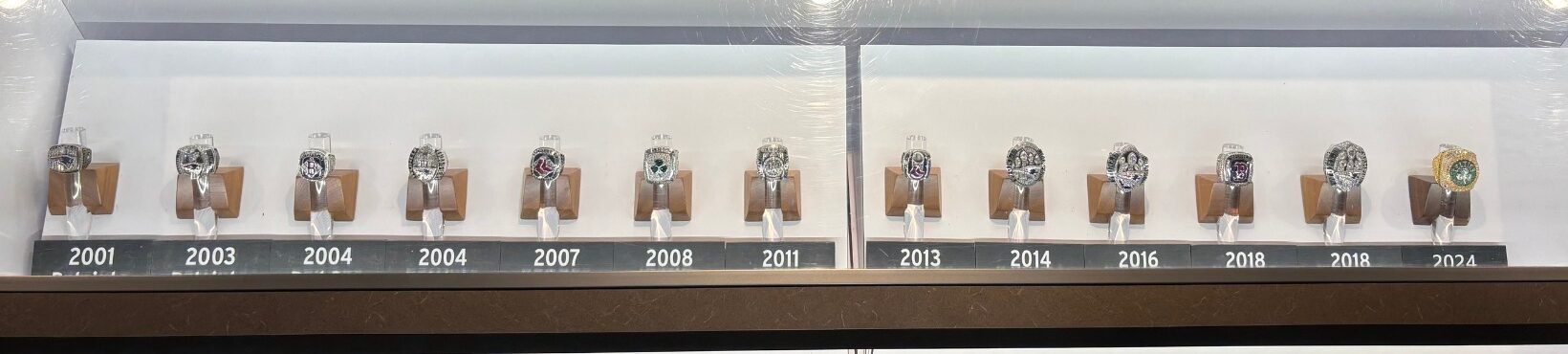
That said, some of the items on display were impressive. It was cool to see the city’s championship rings from 13 championships in four professional sports since 2001. This exhibit would have been even better if it reminded the less-informed viewers (ahem) about some of the details of each of these victories.
It was also fun to see some coverage of Boston’s professional women’s sports teams: Boston Fleet (women’s hockey), Boston Renegades (women’s football) and – new in 2026 – Boston Legacy FC (women’s soccer). There was not much to the exhibit – again, photos – but I guess their histories are relatively short. Frankly I did not even know of the existence of two of these teams. Hopefully, it won’t be long before the Sports Museum is showing off a collection of rings from women’s championships!
In summer (ie, when it’s not hockey season), the Sports Museum also includes Boston Bruins Heritage Hall, opened in 2024 the celebrate the hockey team’s centennial. The high-tech hall includes lots of interactive exhibits (apparently), including goal-shooting, game-calling and reliving historic hockey moments. Sounds like fun, but I missed it. During hockey season, Heritage Hall is open on select game days, for game ticket holders only.
Fenway Park
I acknowledge my baseball bias. It’s no secret that we are a baseball family (read about some of the twins’ baseball experiences through the years), well versed in Red Sox history and lore. So perhaps that’s one reason I appreciated my tour of Fenway Park more than my experience at TD Garden. But more importantly, Fenway is a truly historic ballpark – more than a century old – riddled with design quirks and steeped in lore. For this reason, I would argue, it is more “tour-worthy” than the TD Garden.
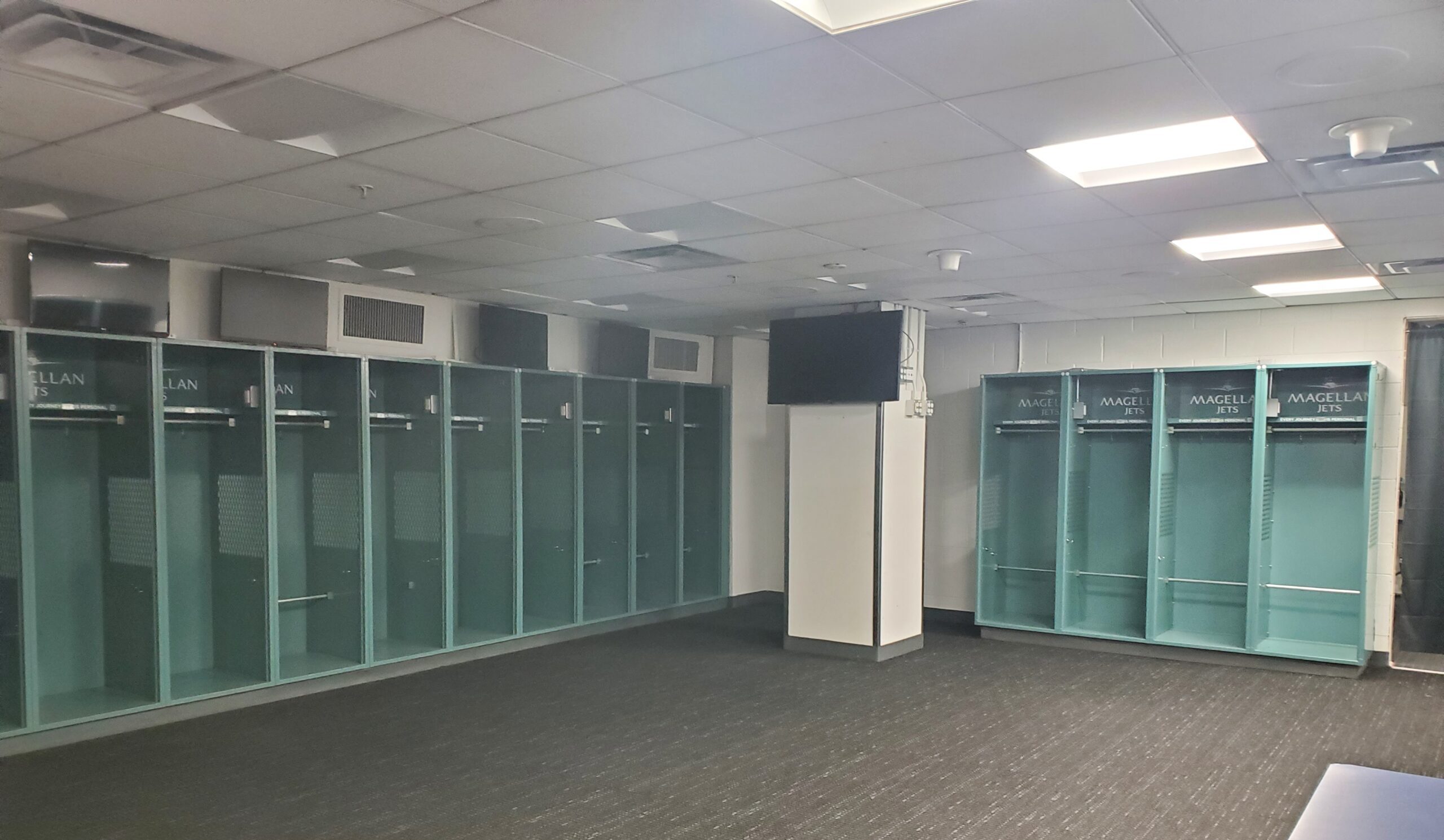
The tour took us up atop the iconic Green Monster, the feature that most defines Fenway Park and most often alters the course of baseball games. We went out to the bleachers to visit the Lone Red Seat, marking the longest homerun ever hit in Fenway Park (502 feet, Ted Williams, 1946). We sat in the press box and we even got to poke our heads into the visiting team’s locker room. Apparently, in the early days of Fenway, the Sox shared a locker room with their opposing team. But that ended after the first year, when a big brawl broke out between the Sox and the Yankees (of course).
Many exhibits are on display around the ballpark, some more interesting than others. Visitors see all the Sports Illustrated covers featuring Red Sox players and all the Red Sox jerseys over the years. Less interesting, the Red Sox Hall of Fame contains plaques dedicated to the most celebrated players.
The tour ends at the Royal Rooters Club, named after an unofficial fan club from the early 20th century. Now, it’s an exhibit area that features many artifacts from Red Sox history. From the olden days, you can see Babe Ruth’s bat or paper tickets from the 1946 World Series. The all-star lineup of the series included Ted Williams, Johnny Pesky, Dom DiMaggio and Bobby Doerr. (These guys are also featured outside Fenway Park in the bronze statue The Teammates: A Portrait of Friendship.) But of course the team was cursed at that time, so they were doomed from the start.
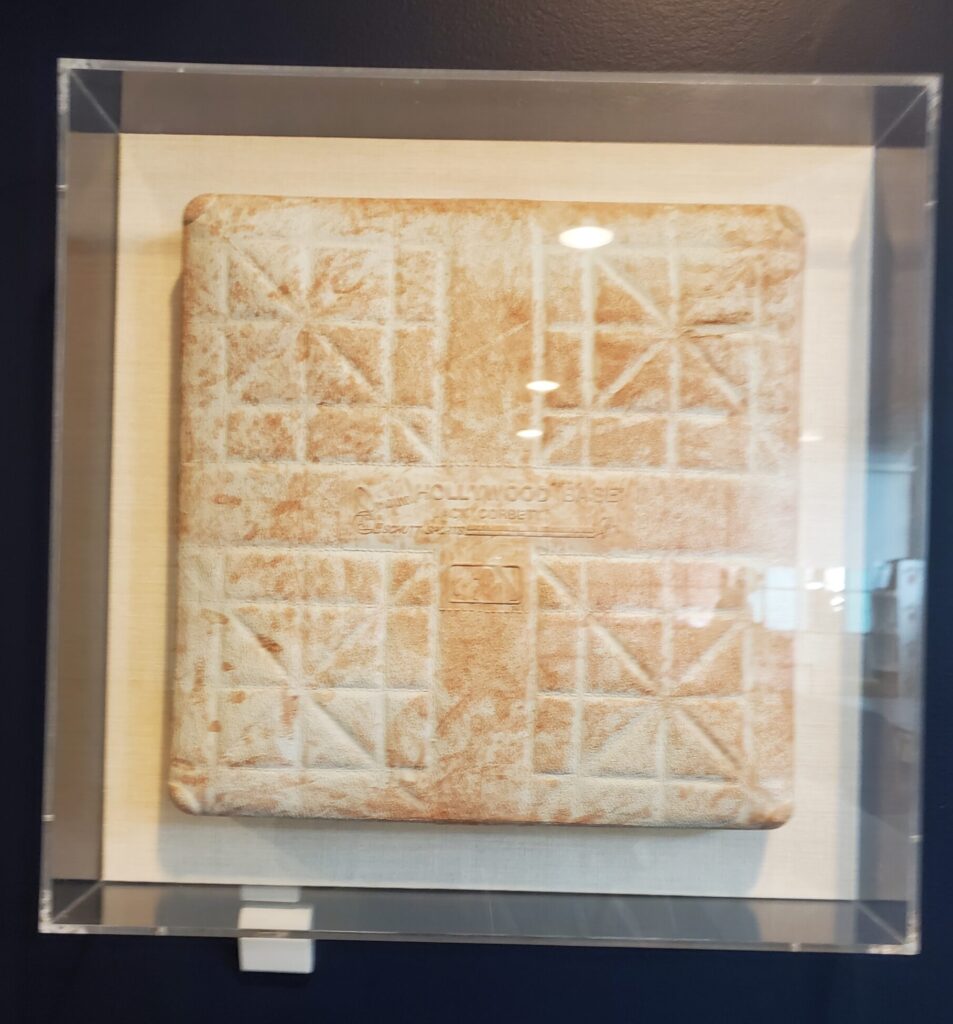
From more recent history, this is Dave Roberts’ stolen base, which is the ultimate symbol of the curse reversed. Roberts successfully stole second base during the 2004 American League Championship, leading to a win against the Yankees and – eventually – a sweep of the Cardinals in the World Series. The base occupies a place of honor in the Royal Rooters Club.
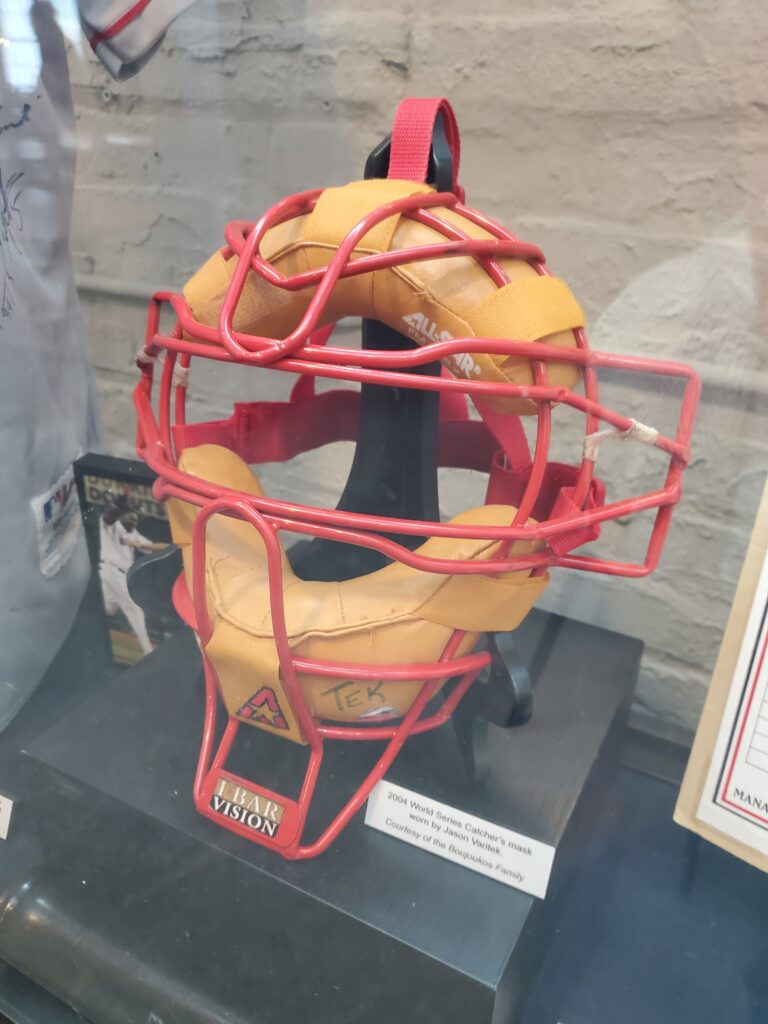
My personal favorite artifact on display was this catcher’s mask, worn by Jason Varitek, star of the 2004 Red Sox in my book. Golden Glove winner, team leader, team captain (one of only four in Red Sox history), and generally the smartest guy on the team. And now part of the coaching staff.
I passed my No 33 Varitek tee on to Twin S (who thinks it’s extra cool because it’s vintage). But I’m still a fan girl!